Grace Fox
Senior Researcher &
Tribal Healthcare Policy Analyst
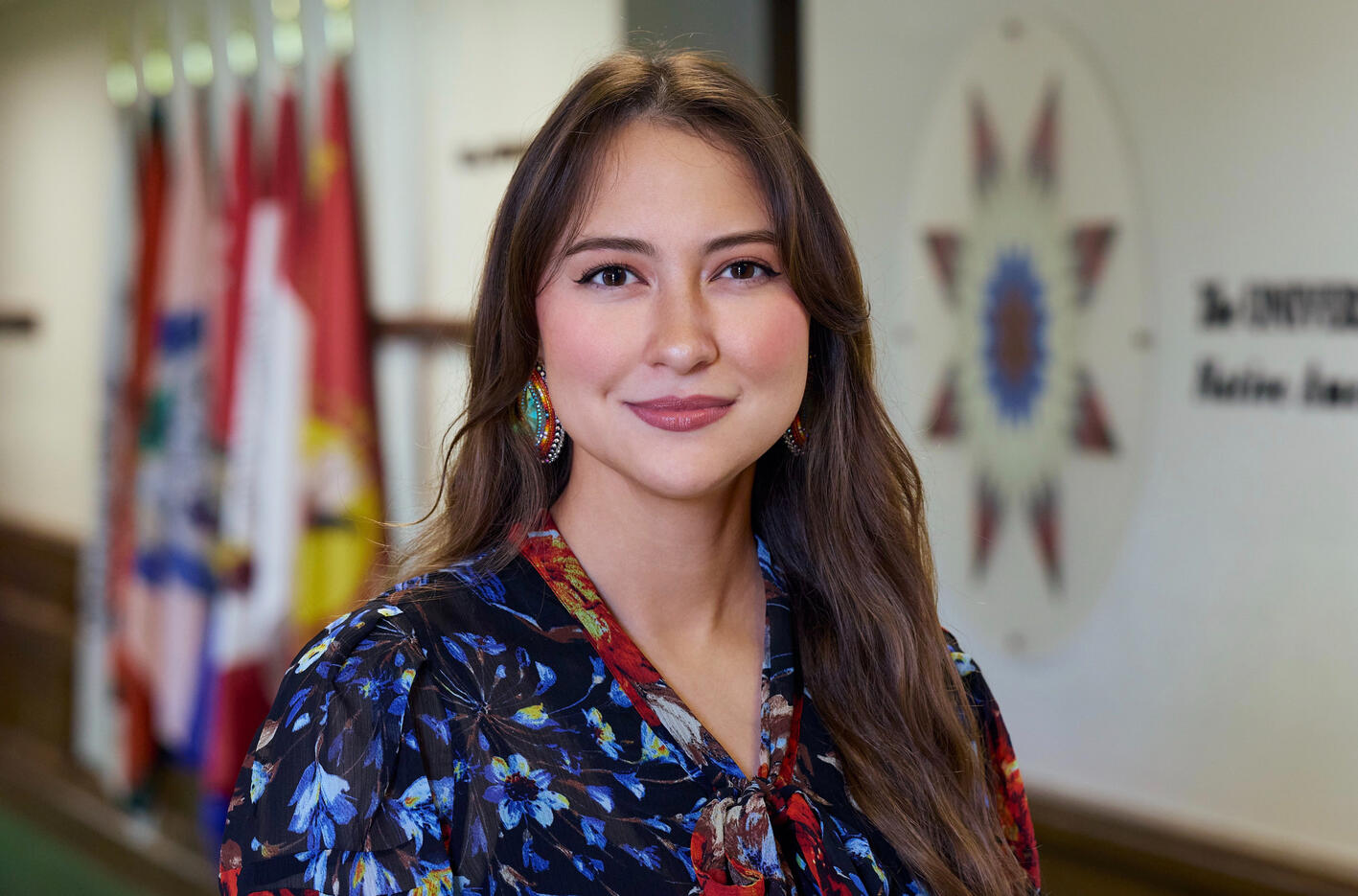
Grace Elizabeth Fox is a Senior Researcher and Tribal Healthcare Policy Analyst at the University of Oklahoma’s Native Nations Center for Tribal Policy Research, where she leads research and policy analysis under the NIH-funded Improving Cancer Outcomes in Native American Communities (ICON) initiative. She earned her Master of Public Policy from the Blavatnik School of Government at the University of Oxford in 2024 as an Eisenhower Global Scholar, graduating with merit and receiving a distinction on her dissertation. She graduated from Columbia University in the City of New York in 2023 with a B.A. in Psychology and Ethnicity & Race Studies (Native American Studies).
"We must stand together to ensure that our voices are not only heard but respected, and our stories not only told but honored." – Wilma Mankiller
Work Experience
My professional path has moved through tribal health policy, federal government, legal advocacy, and community-based education—and across every role, the throughline has stayed the same: producing work that is rigorous, culturally grounded, and useful to Indigenous communities. I care about translation: taking complex systems (laws, funding rules, institutional processes) and turning them into clear options that strengthen sovereignty, protect people, and help communities thrive.Tribal Healthcare Policy Analyst | University of Oklahoma Native Nations Center for Tribal Policy Research (June 2025–Present)
In June 2025, I stepped into my role at University of Oklahoma’s Native Nations Center for Tribal Policy Research in Norman—and it genuinely felt like fate. I found (and was accepted into) this work during a time when my mom was battling cancer, and I was learning—up close—what it means to navigate care, uncertainty, and systems that don’t always feel designed for families like ours. That lived experience sharpened my commitment to policy work that is not abstract, but human.At NNCTPR, I lead research and policy analysis under the National Institutes of Health–funded Improving Cancer Outcomes in Native American Communities (ICON) initiative, with a focus on structural barriers shaping cancer outcomes for the federally recognized Tribes in Oklahoma and Native communities across Indian Country. Much of my work centers on mapping real-world systems end-to-end—how care access actually works in practice, where delays occur, and where patients get financially exposed—then translating those findings into sovereignty-centered recommendations that Tribal leaders and partners can use.A milestone I’m especially proud of: helping publish NNCTPR’s first long-form Sovereign Report, which examined how the Indian Health Service’s Purchased/Referred Care (PRC) program shapes access across the cancer care continuum—from screening and diagnostics to specialty treatment and follow-up—particularly for Oklahoma-area service units, with broader relevance across Indian Country. That project was a true labor of love, and it taught me so much about writing for impact: clarity, traceability, and recommendations that respect the reality on the ground.I also collaborate with clinical and community partners—including work connected to OU Health Stephenson Cancer Center—to support community-guided research, outreach, and patient-centered solutions that honor Tribal sovereignty and strengthen trust.Social Media Manager (Contractor) | Vocal Media (September 2025–Present)
Alongside my policy work, I contract as a social media manager focused on culture-forward short-form content—using storytelling, humor, and “internet language” to create accessible commentary and values-based critique. This role has strengthened my ability to communicate clearly and strategically for mixed audiences: how to frame an idea fast, make it resonate, and still stay accurate and responsible. This work keeps me sharp on storytelling—how to say something true in a way that people actually hear.Substitute Educator | Edmond Public Schools & Oklahoma City Public Schools (Spring 2025)
In Spring 2025, I provided short- and long-term classroom coverage across K–12 settings—delivering instruction aligned with district standards, adapting lesson plans as needed, and maintaining a structured, respectful learning environment. This role strengthened my ability to communicate under pressure, build rapport quickly, and meet diverse student needs with empathy and professionalism. It reminded me how much policy decisions show up in classrooms long before they show up in headlines.Sustainable Economic Development & Food Sovereignty Policy Intern | U.S. Department of Agriculture Office of Tribal Relations (Summer 2024)
During my time in Washington, D.C., I supported tribal economic development and food systems work through hands-on federal policy experience. I helped administer a $700,000 cooperative agreement with Flower Hill Institute to reduce financial barriers related to bison processing/inspection, contributed research and presentations on tribal government business structures and Alaska Native Corporations to inform internal strategy, and coordinated a high volume of Tribal Advisory Committee subcommittee meetings and documentation to support stronger consultation and decision-making. This internship shaped how I think about implementation: it’s not enough for policy to be “right” on paper—it has to be understandable, usable, and built with Tribal Nations, not simply applied to them.Education Policy Intern (Udall Native American Congressional Intern) | U.S. Department of the Interior - Bureau of Indian Education & Bureau of Indian Affairs (Summer 2023)
Summer 2023 was a turning point for me. Through the Udall Native American Congressional Internship, I was placed with the Bureau of Indian Education, where I supported policy and program work focused on Native student outcomes. I drafted memos on FY2023 education programs, reviewed prior policy research and outcomes data (with attention to Southwest-serving contexts), and supported the execution of the Principal Leadership Academy in Phoenix—helping manage logistics for roughly 1,000 participants and supporting communications/documentation to enable leadership follow-through. This experience gave me a real, inside view of how education policy becomes lived experience for Native students—and how much thoughtful program design and stakeholder trust matter.Field Organizing & Policy Intern | New York Civil Liberties Union (Summer 2021)
At NYCLU, I supported civic engagement and civil liberties work through volunteer network-building, program coordination, and policy advocacy support. I created a centralized relationship-mapping database (340+ contacts) to strengthen cross-department outreach, supported training and workshops, expanded volunteer communications workflows for protest monitoring, and contributed to advocacy efforts including work supporting the New York for All Act.Native American Justice Fellow | Project Rousseau (Summer 2021)
As a fellow, I mentored 18 reservation-based students through weekly sessions focused on academic support, professional development, and personal growth. I also served as a liaison with Tribal leadership to align support with community priorities and coordinated resource drives (technology, hygiene, clothing, food) to close immediate gaps impacting student well-being.Student Support Intern | Matriculate (Fall 2020)
In this remote role, I supported high-achieving, low-income high school students through student-facing outreach and accessible resources. I also helped launch Native-focused curriculum content that addressed barriers faced by rural and reservation-based students, and I contributed communications/design work (graphics, short-form materials, and social content) to make guidance easier to understand and act on.Summer Legal Intern | Root & Rebound (Summer 2020)
At Root & Rebound, I supported reentry-related legal advocacy through research, writing, and direct client support. I helped collect and synthesize feedback from 150+ clients for reporting and funding narratives; co-authored and designed a reentry toolkit with Goodwill Industries International; contributed research on policy and jurisdictional issues affecting Native communities; and supported annual reporting and client referral pathways related to ID, housing, employment, healthcare, and more.Additional Experience (Hospitality & Service)
Outside of my policy work, I’ve also spent years in hospitality—roles that taught me a lot about professionalism, calm under pressure, and connecting with people quickly and genuinely. I’ve worked high-volume shifts as a bartender/server at Goro Ramen in Oklahoma City, served as a contracted event bartender with Columbia Bartending Agency in New York City (supporting everything from weddings and graduations to corporate events and fashion week), and worked as a barista at Aspen Coffee.
Even though these roles aren’t “policy” on paper, they shaped how I show up in policy spaces: prepared, people-centered, and steady in fast-paced environments.


Volunteer Experience
My volunteer work is where a lot of my “why” lives. It’s the place I’ve consistently chosen responsibility without a job title attached—building community, protecting dignity, and pushing institutions (political, academic, and cultural) to do better. Whether I’m organizing voter outreach, creating student support systems, or advocating for Native visibility on campus, my volunteer roles reflect the same throughline as my professional work: equity, access, and community-led change.Indigenous Caucus of the Young Democrats of America — Outreach Director
In this role, I help strengthen Indigenous representation within Democratic youth networks by building outreach strategy that is practical, relationship-based, and rooted in real community priorities. I support educational and public-facing campaigns that translate Indigenous policy issues into accessible, action-oriented resources, and I work with partners across states to support the formation of new Indigenous caucuses—expanding civic engagement and ensuring Native voices show up in party decision-making spaces.Young Democrats of Oklahoma - Cleveland County — Volunteer
I support local electoral work through canvassing, phone/text banking, and turnout-focused organizing—plus the behind-the-scenes work that actually makes civic participation possible (planning events, supporting volunteer logistics, and showing up to meetings with candidates and community leaders). My goal is always the same: get more young people engaged, informed, and represented—especially in places where political attention is often selective.University of Oklahoma Staff Senate — Committee Member
In the Community Outreach Committee, I contribute to service projects and partnerships that support staff engagement and leadership opportunities. In the Policy Review Committee, I help review and recommend updates to governance documents and procedures to strengthen transparency, consistency, and responsiveness in decision-making.Udall Alumni Association — Board of Directors (President 2026; Vice President 2025; Communications Officer 2024)
This is one of my most meaningful long-term leadership commitments. Across my roles, I’ve focused on making the organization feel both functional and alive: I lead board operations (agendas, meetings, minutes, action-item tracking), support continuity in decision-making, and keep everyone aligned on priorities. I also built and managed the association’s communications presence (Instagram, LinkedIn, Facebook, and an email listserv) to strengthen visibility and engagement—and I oversee a mentorship program that connects alumni/professionals in Native policy and environmental conservation with mentees to support growth and community connection.Lady Margaret Hall — Student Ambassador
As part of widening participation outreach, I served as a liaison to UK schools and colleges—helping demystify the Oxford application process through Q&As, guidance, and resources for students, families, and educators. I also led regional outreach efforts (Gloucestershire, South Gloucestershire, Bristol, and Haringey) and supported open days through tours and candid conversations about academic life and community at LMH.Women & Gender at the Blavatnik School of Government — Co-Founder & Publicity Chair
I co-founded Women & Gender to create a real home for gender equity work inside the MPP experience—something that felt both intellectually serious and personally supportive. We hosted a bi-weekly speaker/event series (9 sessions) spotlighting student work on gender equity, and I handled communications and logistics to grow participation and cross-cohort dialogue. I also worked with program leadership to advocate for a more inclusive curriculum by recommending more diverse authors, case studies, and examples.Columbia University Native American Council — Political Chair & Community Chair
At Columbia, I held both the cultural/community work and the political strategy work—and I loved that combination because it reflects how Native life actually operates: culture and politics aren’t separable.I guided external engagement by evaluating partnerships and media requests to ensure alignment with Council values and community priorities. I planned and facilitated 10+ cultural and community events (including Frybread cook-offs, the annual Spring Powwow, workshops, language revitalization efforts, and Indigenous Peoples’ Day programming), coordinating with campus offices and partners to execute events smoothly and advocate for stronger institutional support. I also supported the advocacy and application effort for “Indigehouse,” Columbia’s first designated Indigenous residential/community space.Columbia University Center for the Study of Ethnicity and Race Student Advisory Board — Co-Founder & President (2022–2023)
This was one of the most intense and meaningful organizing experiences of my life. I co-founded and led the CSER Student Advisory Board during a pivotal year of advocacy to advance departmentalization and secure sustained resources for a historically underfunded area of study. We mobilized a campus-wide coalition and organized a demonstration of 500+ participants. I authored and led a petition that received 977 signatures and formally presented it to the university president, and I helped secure a written commitment from three Deans to fund and expand CSER through direct meetings and sustained follow-up. I also dedicated 25+ hours in my final semester to recruitment/visibility work and served as a public spokesperson—partnering with campus publications (including Columbia Spectator and The Blue and White), speaking on panels, guest lecturing, and building onboarding/training to sustain future advocacy.Columbia University Mentoring Initiative - Indigenous Family Tree — Mentor
I mentored five Native first-year and transfer students through the transition into campus life—helping with academics, resources, and the emotional reality of navigating institutions that can feel isolating. I also participated actively in community events and helped plan monthly meetings by curating tailored programming and student-facing materials that spoke to Indigenous students’ academic, social, and cultural needs.Matriculate — Advising Fellow & Nonprofit Ambassador
Over four years, I mentored six high-achieving, low-income students through the entire college application process—school selection, essays, resumes, recommendations, financial aid, and the social/emotional side of preparing for college success. I also represented Matriculate at fundraising and networking events in coordination with CEO Madeline Kerner, helping strengthen visibility and relationships that support the organization’s mission.Musical Mentors Collaborative — Violin/Viola/Cello Instructor
I taught individualized lessons for students from under-resourced communities, building technical skills, confidence, and musical literacy through consistent, supportive coaching. I developed differentiated lesson plans across levels (from beginners to pre-conservatory prep), adapted instruction during COVID for effective Zoom-based learning, supported outreach efforts that expanded music access in shelters/supportive housing networks, and coached performance readiness and practice habits in a way that helped students feel capable and seen.Edmond Public Schools Indian Education — Educator & Professional Development Coach
I developed and taught ACT/SAT + college-access curriculum for 30+ low-income Native students, focusing on test readiness, application planning, and building confidence about higher education pathways. My teaching emphasized culturally responsive instruction and individualized coaching—and I’m proud that the program raised ACT scores by an average of 4 points for participating students.Student Voices United for Education — Youth Organizer
This is where my public-facing advocacy muscle started forming. I wrote and delivered a speech advocating for increased education funding to an audience of 50,000+ and spoke with local, national, and international media to elevate awareness of chronic underfunding in Oklahoma public schools. I also built relationships with state legislators, representatives, and gubernatorial staff—bringing student perspectives directly into policy conversations and pushing for funding priorities that matched what students were living every day.


Extracurricular Activities
Outside of my professional and academic pursuits, I find immense joy in activities that nourish my mind, body, and spirit. From creative outlets and athletic challenges to musical performance and adventurous exploration, these passions have shaped not only my well-being but also my approach to leadership, collaboration, and creativity.Minecraft: Creativity and Community Building
As one of the founders of the Columbia University Minecraft Club in Summer 2019, I transformed a shared love for a simple, cuboidal world into a thriving community of creative minds. Leading our founding cohort, I helped establish weekly gatherings focused on strategy, free-build projects, and collaborative creativity, creating a space where nostalgia met innovation. During my tenure as Treasurer and Social Media Chair, I oversaw member recruitment, event planning, and funding acquisition from the university to support special initiatives. Minecraft has always been more than a game for me—it’s been a space to refocus, strategize, and collaborate in ways that mirror real-world leadership and problem-solving.Traditional Native American Beadwork: Artistry and Heritage
Beadwork isn’t just an art form—it’s a living connection to my ancestors, a canvas for storytelling, and a bridge between generations. Through carefully threaded designs and intricate patterns, I express emotions, share stories, and honor cultural traditions that have been passed down through centuries. Each bead represents a piece of history, and each completed design feels like an act of both resilience and celebration.Tennis: Discipline and Resilience
I picked up my first tennis racket at six years old and haven’t put it down since. From recreational play to first-team varsity competition in high school, tennis has been a cornerstone of my commitment to physical endurance, mental focus, and personal grit. While I shifted my focus toward academics in college, recreational matches remained a cherished way to stay active, relieve stress, and reconnect with a sport that taught me resilience and focus from a young age.Music: Expression and Excellence
For over a decade, music has been both a passion and a sanctuary for me. As a violist of thirteen years and a violinist and cellist of nine years, I’ve performed in settings ranging from casual rehearsals to professional stages. In high school, I was honored to perform with ensembles such as the North Central Honor Orchestra (5 years), Oklahoma All-State Orchestra (2 years), and Oklahoma Youth Orchestra (2 years). My journey also included multiple awards from the Solo and Ensemble Festival (6 years) and three seasons with the Edmond Memorial Pit Orchestra.At Columbia University, I continued my musical journey as a violist for the Columbia University Orchestra, performing in prestigious venues such as Lincoln Center during the Spring 2022 and 2023 seasons. Additionally, I served as Principal Violist for Columbia Pops, an orchestra devoted to performing popular music from films, television, video games, and musicals. Through music, I’ve learned the art of teamwork, patience, and the beauty of shared creativity.Now, in this season of returning home and building community in Oklahoma, I’m grateful to have music in my life again in a new way: in January 2026, I joined the OU Norman Civic Orchestra as a violist. It’s been grounding and joyful to return to regular rehearsals—making art with other people, showing up consistently, and remembering how much music has always been part of who I am.Other Passions and Hobbies
Outside these primary activities, I cherish the small joys that keep life balanced and fulfilling. Whether it’s bartending and experimenting with creative drinks, traveling to discover new places, crafting personalized projects, or spending time playing with my dogs, I find joy in the details of everyday life. I have a deep love for interior design, fashion, and thrifting/second-hand shopping, where creativity meets sustainability. I’m also drawn to trying new foods, drinks, and experiences—embracing every opportunity for adventure and growth.
These activities aren’t just hobbies—they’re expressions of who I am, what I value, and how I recharge. They remind me to stay curious, resilient, and connected to the world around me, both professionally and personally.


Research & Projects
I’m a research person by nature—and a translator by practice. Across roles, my work has centered on mapping complex systems (healthcare policy, federal funding, program authority, education infrastructure) and turning them into clear, actionable options that Tribal Nations and partners can actually use. Some projects are policy-forward and implementation-oriented; others are academic and cultural. All of them reflect the same goal: rigorous work that stays grounded in lived experience, sovereignty, and real-world impact.2026 — University of Oklahoma, Native Nations Center for Tribal Policy Research (NNCTPR)
“Purchased/Referred Care and Cancer: Overview and Options for Tribal Consideration”
This report is my first major publication at NNCTPR—and the first long-form Sovereign Report released by the Center. I authored a comprehensive policy analysis examining how the Indian Health Service (IHS) Purchased/Referred Care (PRC) program shapes access across the full cancer care continuum, with a focus on Oklahoma-area service units and broader relevance for Indian Country.At its core, the report maps the PRC system end-to-end: eligibility and residency requirements (including PRC Delivery Area geography), payer-of-last-resort and alternate resource rules, medical priority levels that govern approvals, and the operational workflow for referrals, authorizations, and claims. I also documented where real-world breakdowns most often occur—especially at referral initiation, authorization/notification, and denials—and analyzed how administrative constraints and funding limitations can increase delays, confusion, and patient financial exposure (including situations where outside providers improperly bill patients).Most importantly, I translated those findings into tribally informed policy and implementation options—focused on strengthening navigation and communication, improving coordination with oncology partners, and reducing avoidable delays in diagnosis and treatment, while honoring self-determination.Click HERE to read my PRC Report!2024 — University of Oxford, Blavatnik School of Government (MPP Dissertation)
“Leveraging Flexible Federal Funding at the United States Department of Agriculture to Address Economic Disparities in Native American Communities”
My MPP dissertation examined how flexible federal funding can be designed and delivered in ways that actually work for Native communities—particularly in agriculture, food sovereignty, and economic self-sufficiency. I explored how flexible funding can allow Tribal Nations to tailor resources to local cultural and economic contexts while supporting community-led development.At the same time, the project identifies what makes “flexibility” succeed (or fail) in practice: robust Tribal consultation, capacity-building and staffing realities, administrative burden, and education/resource gaps that can unintentionally limit access. I synthesized evidence and case examples into recommendations for more effective program design and delivery—aimed at strengthening trust, improving government-to-government relationships, and reducing friction between policy intent and real-world implementation.Contact me if you are interested in reading my dissertation!2024 — U.S. Department of Agriculture, Office of Tribal Relations (Capstone Project)
“Tribal Government Business Structures, Alaska Native Corporations, & USDA Program Authority”
This capstone project explored how different Tribal enterprise structures and Alaska Native Corporations (under ANCSA) interact with federal program authority, eligibility, and implementation—especially in USDA contexts. I examined governance and legal frameworks (including corporate forms and relevant Federal Indian Law considerations) and highlighted the practical implications for program delivery and stakeholder engagement.Ultimately, the project emphasizes why clarity matters: when program authority is unclear, communities can be excluded, implementation becomes inconsistent, and the burden often falls on Tribes and Native communities to navigate ambiguity. My recommendations focused on consultation, clearer guidance, and policy design that supports self-determination and equitable outcomes for both federally recognized Tribes and ANCs.Contact me if you are interested in reading my capstone!2023 — U.S. Department of the Interior, Bureau of Indian Education (Capstone Project)
“Promoting Indigenous Food Sovereignty: Developing Purchase Plan Resources for Bureau of Indian Education Schools”
This project developed practical purchase-plan resources to help BIE-controlled schools source ingredients for traditional Indigenous meals—aligned with Indigenous Food Hub objectives and culturally grounded nutrition education. I focused on implementation support for pilot hub sites (BIE schools and BIA detention centers), including sourcing pathways from Native producers, training considerations for cooks, and educational materials to strengthen cultural connection through food.The throughline was food as both nourishment and sovereignty: integrating Indigenous knowledge and social determinants of health into program design so that meals, procurement, and education could support community wellness and cultural continuity.Contact me if you are interested in viewing my project!2023 — Columbia University, Center for the Study of Ethnicity and Race (Senior Honors Thesis)
“The Mandalorian and Indigeneity: Exploring the Impact of Authentic and Stereotyped Representations of Native Americans in Media and Popular Culture on Identity Formation, Community Healing, and Decolonization”
My honors thesis examined the evolving relationship between Native communities and popular media through Indigenous representation in the Star Wars universe—specifically The Mandalorian. Through interviews with Indigenous authors, academics, creators, and community members, I explored how representation shapes identity formation and how popular media can become a site of cultural reclamation, storytelling, and community healing.I analyzed how the series engages historical anti-Indigenous sentiment and “white savior” narratives, and I documented the ways Native communities have reclaimed meaning and belonging through characters like the Mandalorian and Grogu—whose imagery appears in regalia, art, and community media as symbols of resonance. Ultimately, this project is about narrative power: how seeing yourself as a hero can shape what you believe is possible, and who gets to tell the next story.Contact me if you are interested in viewing my thesis!2023 — Columbia University & Harvard University, The Neuroscience and Psychology of Music
“The Psychology of Music in Mobilizing the Masses: Investigating Possible Mechanisms for Political Goal Achievement”
This interdisciplinary project explored how music can shape political attitudes and mobilize social movements. Through literature review, I applied psychological theories—emotion processing, heuristics, and social identity—to explain how music and lyrics evoke emotion, reinforce group identity, and influence collective action.The work culminated in a co-authored paper and an academic poster presentation, translating complex research into practical insights for public-interest communications and movement strategy—especially how music can foster solidarity, challenge the status quo, and inspire meaningful social change.2022 — Columbia University, Psychology Department (Frontiers of Justice)
“Mental Health Emergency Response: A Policy Proposal for New York City”
This project sat at the intersection of psychology and public policy, focused on gaps in NYC’s response to mental health crises. Our team assessed existing models (including B-HEARD and 988) and identified implementation barriers such as distrust, funding limitations, training gaps, and coordination challenges.We proposed an operational approach to better integrate mental health professionals into emergency dispatch and response workflows—prioritizing de-escalation and continuity of care. The project strengthened my ability to apply psychological insights to program design and develop equity-centered policy solutions.2021 — Columbia University, Research Methods: Human Behavior
“Maximizing Tendencies and Risk: How Do Differing Levels of Risk Shape Tendencies to Maximize or Satisfice?”
In this study, I designed and ran an online experiment using a modified Iowa Gambling Task in PsyToolKit to examine how financial risk influences decision-making among maximizers and satisficers. I integrated behavioral data with survey instruments and analyzed decision speed, performance, and emotional responses across different risk conditions.The findings challenged my initial hypotheses and highlighted more nuanced relationships between risk sensitivity and choice behavior—strengthening my skills in experimental design, data collection, analysis, and clear research communication.
About Me
Hesci (“Hello” in Mvskoke), I am Grace Fox! I am an enrolled citizen of the Seminole Nation of Oklahoma, based in Norman, and I’m committed to building policy solutions that honor tribal sovereignty while improving health outcomes for Native people.I proudly serve as a Tribal Healthcare Policy Analyst at the University of Oklahoma’s Native Nations Center for Tribal Policy Research (NNCTPR), where I lead research and policy analysis under the NIH-funded Improving Cancer Outcomes in Native American Communities (ICON) initiative. As the first policy analyst hired at the Center, my work focuses on understanding—and helping address—the structural barriers that shape cancer outcomes for the 38 federally recognized tribes in Oklahoma, as well as Native communities across Indian Country. Much of my work is about translating complex systems into actionable options for tribal leaders to strengthen access, coordination, and patient protections while honoring self-determination.My background is in federal Indian policy, culturally grounded research, and advocacy. In 2024, I earned my Master of Public Policy from the University of Oxford’s Blavatnik School of Government as an Eisenhower Global Scholar. To fulfill my MPP fieldwork requirement, I worked in Washington, D.C. for the U.S. Department of Agriculture’s Office of Tribal Relations. My experience supporting tribal food sovereignty and economic development initiatives directly inspired my dissertation, which examined how flexible federal funding can be leveraged to uphold the federal trust responsibility while advancing sustainable, community-led development.I earned my bachelor’s degree from Columbia University in 2023, graduating cum laude with a double major in Psychology and Ethnicity & Race Studies (Native American/Indigenous Studies). My academic and leadership journey has been recognized through honors including the Gates Scholarship, the Udall Undergraduate Scholarship, and the Udall Native American Congressional Internship, where I served at the U.S. Department of the Interior’s Bureau of Indian Education.Across roles, my goal is consistent: produce rigorous, sovereignty-centered policy research that is useful to Tribal Nations—work that supports clearer pathways to care, stronger systems, and outcomes that reflect what Native communities have always deserved.For more information, visit my LinkedIn!
Contact Me
I'd love to hear from you! Please fill out the form below to send me an email. Thanks!
Thank you
Thanks for your email! I'll be sure to follow up with you as soon as I can.
News
Here are some news articles, videos, and podcasts where I'm featured.Podcasts:
Grace Fox of Columbia University: Psychology & Indigenous Studies, Rhodes Finalist and Matriculate Alum. College Matters. Alma Matters. April 2023.Grace Fox on the Seminole Nation and Indigeneity, American History, and Finding Purpose and HappinessVideos:
Grace's Story - Class of 2021 Matriculate Advising FellowUniversity of Oklahoma - Native Nations Center for Tribal Policy Research (NNCTPR):
Native Nations Center for Tribal Policy Research | Our StaffOU News | OU Adds First Tribal Healthcare Policy Analyst to Support ICON GrantSeminole Producer | OU’s First Tribal Healthcare Policy Analyst Is Member of Seminole Nation of OklahomaNative News Online | New Native Nations Center for Tribal Policy Research Analyst Will Examine Cancer Disparities in Oklahoma TribesNative Nations Center for Tribal Policy Research | Purchased/Referred Care and Cancer: Overview and Options for Tribal ConsiderationOU News | Native Nations Center Releases Report on Cancer Care AccessBioengineer | Study Explores Access to Cancer Care Among Native PatientsBooBoone | Report highlights gaps in cancer care access for tribal citizensEurekAlert! | Report examines cancer care access for Native patientsGene Online | University of Oklahoma Report Analyzes Barriers in Indian Health Service Cancer Care ProgramMirage News | Report Probes Cancer Care Access for Native PatientsMvskoke Media | OU report sheds light on the barriers to cancer care for Tribal citizensMvskoke Media Live Wire | Live Wire: Purchased/Referred Care and CancerNative News Online | Cancer Care Delays in Indian Country Examined in New Policy ReportNative Bidaské | New Report Examines Barriers to Cancer Care for Native PatientsNational Indigenous Times | University of Oklahoma’s Native Nations Research Centre Releases Key Report on Cancer Care AccessNational Today | Report Examines Cancer Care Access for Native PatientsNews Medical Life Sciences | Report highlights gaps in cancer care access for tribal citizensPechanga.Net | Cancer Care Delays in Indian Country Examined in New Policy ReportScienmag | Study Explores Access to Cancer Care Among Native PatientsSeminole Producer | Native Nations Center Releases Report on Cancer Care AccessStem Cell 101 | Report highlights gaps in cancer care access for tribal citizensEisenhower Global Scholars:
2024 Global Scholars - Eisenhower FellowshipsEisenhower Global ScholarsEisenhower Fellowships Names 2024 Eisenhower Global ScholarsGrace Fox - Eisenhower FellowshipsOutstanding US scholars to take the next steps to delivering global change | Blavatnik School of GovernmentOxford University Blavatnik School of Government:
Grace Fox | Blavatnik School of GovernmentOutstanding US scholars to take the next steps to delivering global change | Blavatnik School of GovernmentColumbia University:
Grace Fox, CC ’23, finds identity through community-based work, leads fight for CSER departmentalizationAwards and Honors | Columbia CollegeA Location of Possibility and the Practice of Freedom: How a Decolonial Contemporary Civilization Section is Transforming Columbia’s Classroom CultureUdall Native American Congressional Internship:
Udall Native American Congressional Internship - Meet Our ScholarsUdall Foundation Awards 2023 Native American Congressional InternshipsUdall Undergraduate Scholarship:
Udall Undergraduate Scholarship - Meet Our ScholarsMedal for Meritorious Service, Pew Scholar, Udall Scholar, and More AwardsFORBES: The Udall Scholars For 2022 Have Been NamedFour Columbians Recognized by the Udall Undergraduate ScholarshipCenter for the Study of Ethnicity and Race Student Advisory Board:
CSER Student Advisory Board hosts rally, calls for departmentalizationInside Room 420: The revived fight for CSER’s department statusA Department of Our Own - Columbia’s Center for the Study of Ethnicity and Race fights for its future.Columbia University CSER Faculty and StaffColumbia University Minecraft Club:
The Columbia Minecraft Club: Building a Community, Block by BlockThe Bill and Melinda Gates Scholarship:
Memorial Student Recipient of Gates ScholarshipThe Oklahoman - AchieversEdmond Life and Leisure - Honored TeensValedictorians, Salutatorians Lead Their ClassesWEOKIE Foundation Award:
Edmond Area Students Earn Prestigious WEOKIE Foundation ScholarshipC-SPAN Documentary Competition Award:
Edmond Students Receive Awards in C-SPAN CompetitionOklahoma Teacher Walkout:
'We are Oklahoma!' Students rally for education at Oklahoma CapitolStudents join US teacher protest in OklahomaThe Latest: Fallin wants teachers to get back to classroomsGovernor Mary Fallin wants teachers to get back to classroomsFallin compares teachers to teenagersHow can we support the Oklahoma Teacher Strike?Teacher Protests Put Republicans on the Spot in Red StatesAssociated Press: The Latest: Fallin wants teachers to get back to classroomsThe National Post: Fallin wants teachers to get back to classrooms
Honors & Awards
I’ve been incredibly lucky to receive support from programs that invest in Indigenous leadership, public service, and rigorous scholarship. I list these as a way to honor the mentors, communities, and institutions that helped make my education and work possible.Graduate & Oxford Recognition
Merit Honors & Dissertation Distinction — University of Oxford, Blavatnik School of Government (November 2024)
Awarded Merit for overall program performance and Distinction on my dissertation (Oxford’s postgraduate scale typically ranges from Distinction to Merit to Pass).Cobell Graduate Scholar (August 2023)
Merit-based scholarship supporting Native students pursuing accredited post-secondary education.Eisenhower Global Scholar — Eisenhower Global Scholars Program / Eisenhower Fellowships (May 2023)
Selected as one of four U.S. scholars funded for postgraduate study abroad and lifelong engagement in the EF global network.Public Service & Federal Experience
Future Leaders in Public Service Fellowship (May 2024)
Selected through the Partnership for Public Service program supporting paid federal internships and early-career public service pathways.Udall Native American Congressional Internship (March 2023)
Selected for the Udall Foundation’s program providing Native students hands-on experience with federal policymaking and the government-to-government relationship.Udall Undergraduate Scholar (May 2022)
National scholarship recognizing leadership, public service, and commitment to Native Nations and/or environmental issues.Columbia University Academic & Leadership Honors
Cum Laude — Columbia University (May 2023)
Graduated with Columbia College Latin honors recognizing sustained academic excellence.CSER Academic Excellence Award / Departmental Honors — Center for the Study of Ethnicity & Race (May 2023)
Recognized for consistent intellectual rigor and contribution to CSER coursework and community.CSER Honors Thesis Award — Center for the Study of Ethnicity & Race (May 2023)
Awarded for my thesis: “The Mandalorian and Indigeneity…” (representation, identity formation, community healing, and decolonization).Multicultural Affairs Graduation Cord Recipient (May 2023)
Recognized for leadership and sustained commitment to inclusion, social justice, and multicultural engagement.Harry J. Carman Fellowship Recipient (April 2023)
Competitive fellowship supporting graduating Columbia College seniors pursuing graduate study (need-informed).Solomon & Seymour Fisher Civil Liberties Fellow (May 2021)
Fellowship supporting civil liberties–focused public service work (including NYCLU-related work) and professional development.Navab Fellow (May 2021)
Fellowship supporting Columbia students in pursuing meaningful summer opportunities and career exploration through funded placements.Dean’s List / Dean’s Honor Roll (2019–2023)
Awarded across eligible semesters for maintaining a high academic standing while balancing leadership and community commitments.Columbia University Kluge Scholar (March 2019)
Named a Columbia Undergraduate Scholar in recognition of academic promise, intellectual curiosity, and engagement beyond the classroom.Scholarship & Fellowship Finalist Recognition
Rhodes Scholarship Finalist (October 2022)
Selected as a finalist for one of the world’s most competitive postgraduate awards.Marshall Scholarship Finalist (October 2022)
Selected as a finalist for a U.S.–UK graduate scholarship supporting academic excellence and leadership.Euretta J. Kellett Fellowship Finalist (February 2023)
Finalist for Columbia’s fellowship supporting postgraduate study at Oxford or Cambridge.Jarvis & Constance Doctorow Fellowship Finalist (February 2023)
Finalist for Columbia’s fellowship supporting postgraduate study at Oxford in the social sciences.Early Recognition
Gates Scholar — Cohort II (April 2019)
Highly selective, last-dollar scholarship recognizing outstanding student leadership and academic excellence.C-SPAN StudentCam Documentary Contest — Honorable Mention (April 2019)
National recognition for documentary storytelling and civic engagement through C-SPAN’s annual student competition.